
 Search Articles


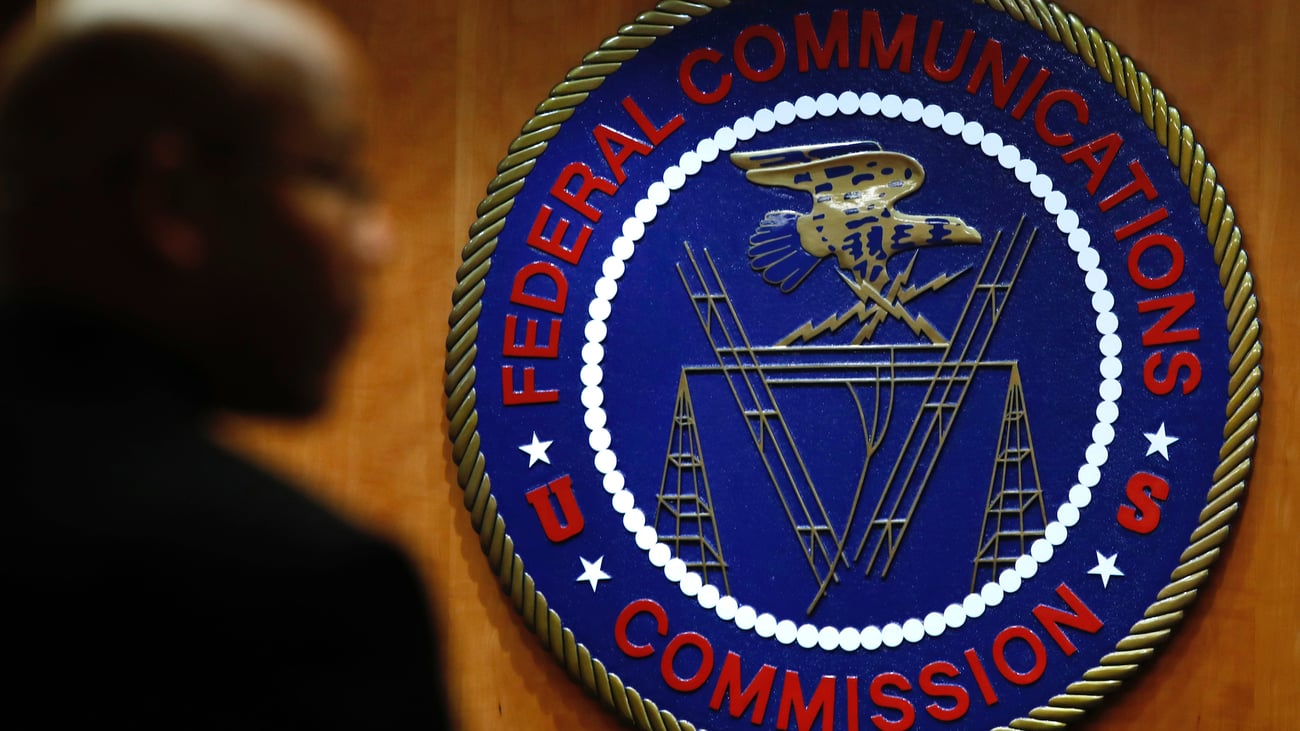
WASHINGTON (CN) — In a case from wireless giants set for arguments next week, the Supreme Court will consider stripping regulators of a key enforcement tool for consumer protection rules regulating the airwaves.
AT&T and Verizon are challenging the Federal Communications Commission’s authority to fine carriers. The wireless giants collectively face over $100 million in penalties for selling customers’ data to a third party offering a location-finding service to law enforcement officials. But the companies argue the congressional scheme for enforcing such an order is unconstitutional.
The carriers say the “penalty-now-trial-later” system violates their Seventh Amendment right to a jury trial. Like the Security and Exchange Commission’s penalty procedures — which the justices found unlawful two years ago — the carriers claim the FCC’s process deprives juries of their constitutional prerogative to settle questions of fact.
“This court should recognize that scheme for what it is: another ‘stealthy encroachment[]’ on the jury-trial right,” the carriers wrote.
Round two
Nearly 50 years ago, the Supreme Court upheld executive branch agencies’ ability to adjudicate violations of public rights statutes without infringing on the Seventh Amendment right to a jury trial in Atlas Roofing Company v. OSHA.
In 2024, the court was asked to review how Atlas Roofing applied in a hedge fund manager’s fraud case. George Jarkesy said his rights were violated by having an in-house administrative law judge decide the fraud case against him instead of a jury.
The conservative supermajority agreed. In SEC v. Jarkesy, the court held that when the SEC seeks civil penalties for securities fraud, the Seventh Amendment entitles the defendant to a jury trial.
Writing for the majority, Chief Justice John Roberts, a George W. Bush appointee, said Atlas Roofing only applied to actions that were not suits at common law.
The government, however, says Atlas Roofing does apply in the wireless carriers’ case. There, the government said, the court upheld the Occupational Safety and Health Act of 1970, which empowered an agency to impose civil penalties subject only to deferential review by a panel of appellate judges.
Unlike Atlas Roofing, the government said the FCC process includes the opportunity for a jury trial, after the agency issues a forfeiture order against a carrier.
Order of operations
Six decades ago, Congress amended the Communications Act to authorize the FCC to seek monetary forfeitures for certain violations. First, the commission issues a notice of liability, giving the recipient an opportunity to respond. Then, the agency issues a forfeiture order.
AT&T and Verizon received liability notices from the FCC in 2020 for failing to take steps to protect the confidentiality of customers’ location information. The agency then issued forfeiture orders of $57,265,625 and $46,901,250 against AT&T and Verizon, respectively.
The government says the forfeiture order itself does not require payment, create a debt or trigger the accrual of interest. However, if the carriers declined to pay, the commission could refer the case to the Justice Department to file a civil suit.
Wireless giants call this the default-and-be-sued process. AT&T and Verizon took an alternative route, deciding to pay the order in full and then seek review in the court of appeals. The carriers said the default-and-be-sued process was theoretical.
“Carriers, like judges, cannot be ‘required to exhibit a naiveté from which [other] citizens are free,’” the carriers wrote. “In the real world, no business can afford to thumb its nose at its principal regulator by defying an order to pay that regulator tens of millions of dollars in penalties. Nor can any business surrender its only guaranteed opportunity to ask a judge to instruct the commission that it has legally or factually erred.”
The government contends that the rarity of jury trials for such suits follows the general trend of civil cases.
“In the 12-month period ending on September 30, 2025, district courts resolved 407,379 civil cases, of which only 1182 (0.3%) culminated in jury trials,” the government wrote. “More importantly, that pattern has no bearing on the Seventh Amendment issue. The amendment preserves the right to jury trial but does not guarantee some minimum frequency of jury trials.”
Hurdles from the start
The government contends the forfeiture order is a prerequisite for eventually obtaining fines through the courts. But the carriers question how an order demanding liability payments within 30 days could be understood as an order to pay.
“It is a bizarre view for the United States to take: that when agencies finally adjudicate violations and impose penalties, regulated parties may simply ignore them,” the carriers wrote.
If the forfeiture orders weren’t enforceable themselves, the carriers questioned why the government would fight so hard to preserve the FCC’s authority to issue them.
“The answer is: even if forfeiture orders are just paper, they are still tigers,” the carriers wrote.
Deregulatory agenda
The dissenters in Jarkesy framed the court’s decision as an effort to dismantle the administrative state. Justice Sonia Sotomayor, a Barack Obama appointee, framed the ruling as a “devastating blow to the way our government operates,” fearing that government agencies would lose the ability to enforce laws that Congress enacts.
Former FCC chairs and consumer advocates worry the carriers’ case only adds to those concerns. One advocacy group warned that at least 11 other federal statutes currently authorize agencies to obtain civil penalties under the same framework. Without such authority, they warned that some agencies would have no authority to hold companies accountable.
“It is thus evident that the end game of the carriers’ Seventh Amendment challenge, and other challenges like it, is not merely to force agencies to follow different procedural routes,” Citizens Utility Board, a nonprofit representing the consumers, wrote. “It is to kneecap agency enforcement more fundamentally.”
The Supreme Court will hear arguments on Tuesday.
 Follow @KelseyReichmann
 Follow @kelseyreichmann.bsky.social
Subscribe to our free newsletters
Our weekly newsletter Closing Arguments offers the latest about ongoing trials, major litigation and rulings in courthouses around the U.S. and the world, while the monthly Under the Lights dishes the legal dirt from Hollywood, sports, Big Tech and the arts.
Additional Reads
 Penis costume protester prevails in court April 15, 2026
 Sotomayor apologizes to Kavanaugh for ‘hurtful’ comments April 15, 2026