Search Articles


SURABAYA, Indonesia (CN) — A college student in Surabaya, Indonesia’s second-largest city, Hyasintus Satrya Ranggadewa has participated in protests against his government.
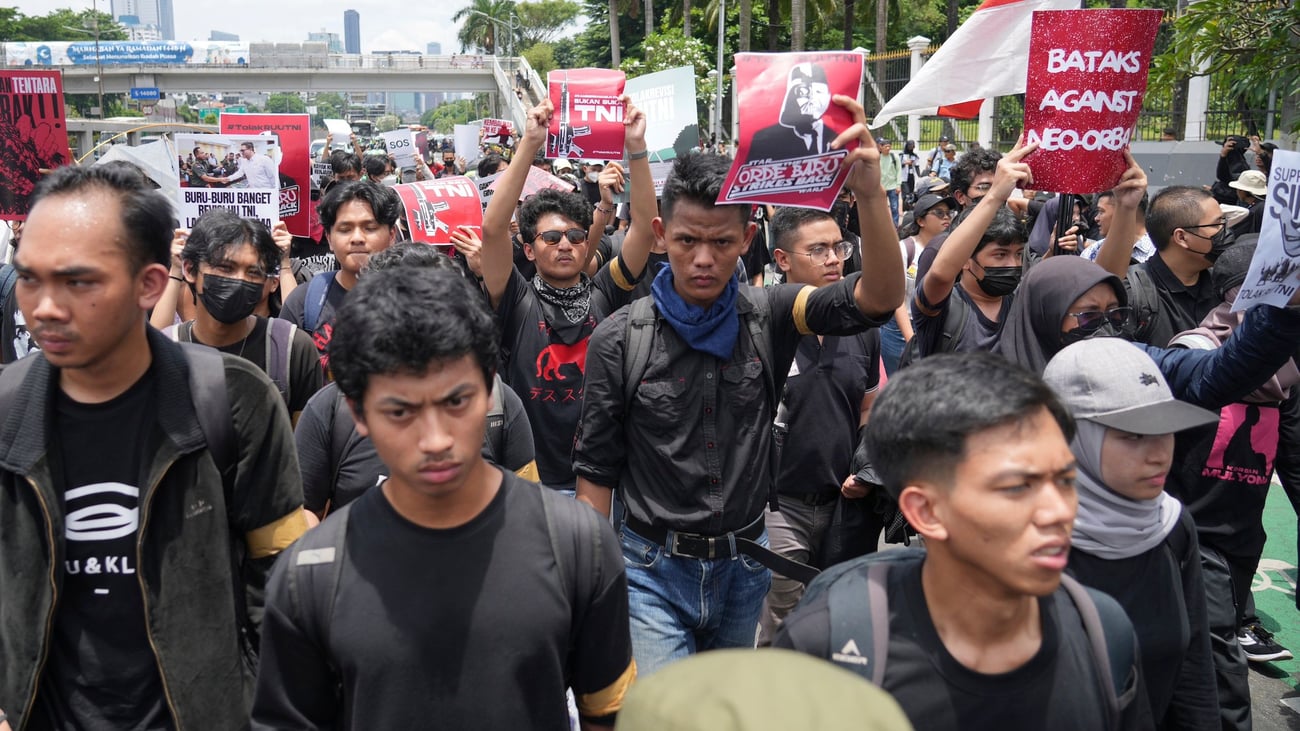
For months on end last year, tens of thousands of young people flooded streets across the country, protesting everything from democratic backsliding to an economic downturn. Authorities responded violently, further inflaming tensions.
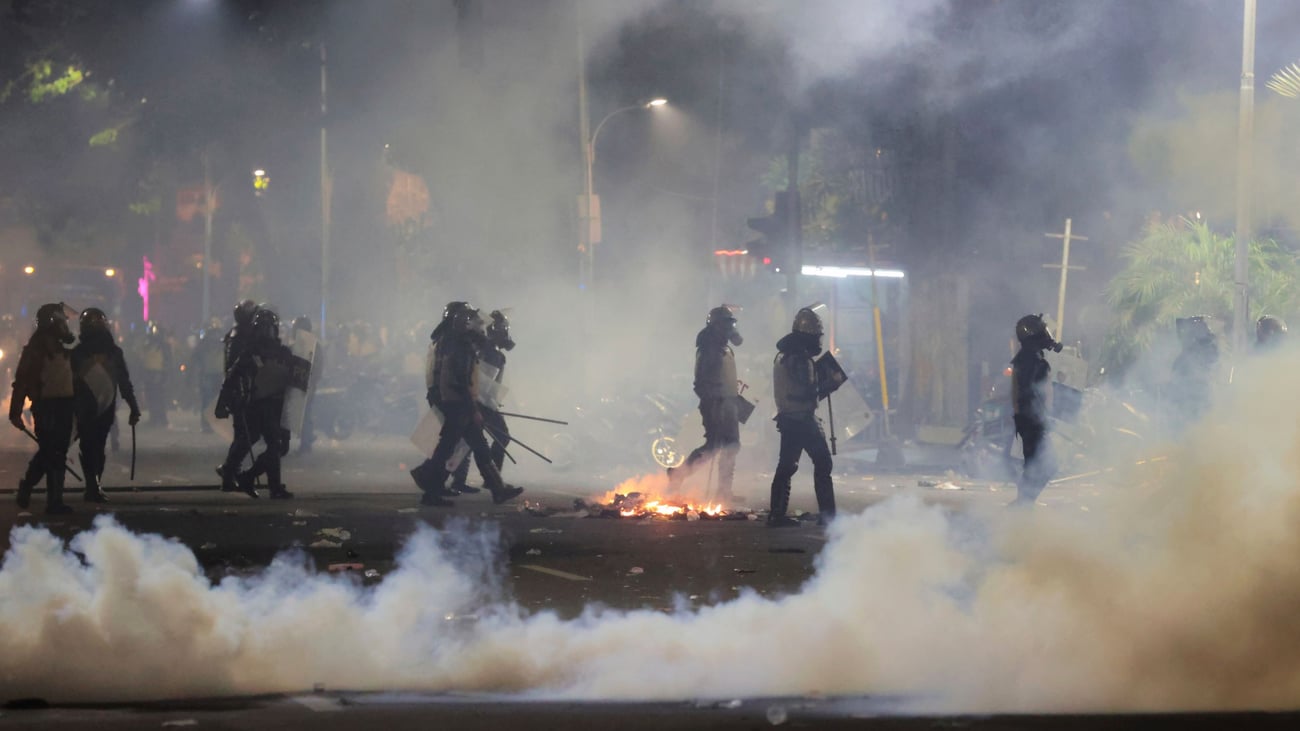
As the protests continued throughout much of 2025, they became a broader referendum on the legitimacy of Indonesia’s fragile democracy — and grew increasingly bloody. In just two months in August and September, 11 people died, including a bystander who was run over by a riot-control vehicle.
“I was there when people started throwing Molotov cocktails at the police station,” Ranggadewa recalled of the protests in an interview at a coffee shop in Surabaya. “In that moment, I was becoming cautious. You could really feel the anger against the government.
“The mob became restless after that,” he said. “That’s the moment when I could say that Indonesia was caught in a sea of fire.” The inevitable conclusion, reached by Ranggadewa and many other young protesters: “The government did not listen to the people.”
Although the protests eventually petered out, observers say the country’s slide into authoritarianism has only continued.
A new low point came just weeks ago. In March, Indonesian lawyer and activist Andrie Yunus was riding his motorbike through central Jakarta when two men drove by and threw acid on him.
The attack left Yunus with burns on 24% of his body, as well as serious damage to his right eye. At press time, Yunus has already undergone five operations and is facing months of further treatment as doctors work to save his vision.
Jessenia Destarini, an activist who works closely with Yunus, learned the news through a private WhatsApp channel shortly after the attack.
“All of us were really shocked,” she said in a phone interview. “We did not see it coming at all. It was out of the blue. Yunus had not been involved in any public engagements lately.”
More than the brazenness of the assault, what has outraged many in this country is the broader context of the case. Yunus is a figurehead for the group KontraS, an Indonesian nonprofit that demands accountability for forced disappearances in the country.
Shortly after the attack on Yunus, police in Jakarta detained four suspects, all of them part of an elite military intelligence unit. Yunus’ legal team thinks that up to 16 people may have been involved.
In spite of all that, police soon transferred the case to the military.
“If the case is investigated by the military, it means that the trial will go through the military court,” Destarini said. “In Indonesia, the military court has a history of perpetrating impunity and lacking transparency.”
Other observers express similar concerns. “The Indonesian military justice system lacks transparency, independence and impartiality. It has failed to adequately investigate and prosecute alleged serious human rights abuses by military members over the last six decades,” said Andreas Harsono, an Indonesia researcher with the group Human Rights Watch. “The civilian justice system is much better than the military system.”
These fears are about much more than just an acid attack. Among the many targets of last year’s protests was a controversial law giving the military a bigger role in civic life. One vocal opponent of the law: Andrie Yunus.
In that legal change, as well as in authorities’ handling of protests and the Yunus investigation, some see echoes of the Suharto regime. Suharto led Indonesia as a dictator for over three decades before stepping down in 1998. It was a brutal period, characterized by killings of intellectuals, leftists, feminists and ethnic and religious minorities.
Today, the former dictator’s son-in-law, Prabowo Subianto, is president.

A former army general, he’s been accused of letting his units kidnap and torture civilians. Although Subianto has never faced a trial for the claims, he’s admitted to helping kidnap activists under Suharto’s rule.
So controversial is Subianto that for years, he was banned from even entering the United States. The ban was lifted by the first Trump administration in 2020, while Subianto was serving as minister of defense under former president Joko “Jokowi” Widodo.
For Destarini and her colleagues in the vast archipelago nation, the nature of the Yunus attack is a worrying sign that state violence is once again being normalized in the country.
“The state will just use legal bases [for] their attack against human rights defenders,” Destarini said. “They will call it treason or [will try] to incite people to retaliate against those opposing the state.”
The broader trends here — weakening human rights and democratic norms — are ones that observers warn are playing out on a global scale. In an annual report from April, Amnesty International said that human rights are under assault worldwide.
In his speech in late February, UN Secretary-General António Guterres raised a red flag about global human rights violations. Around the world, he said, brute force is displacing the rule of law.
“Across every front, those who are already vulnerable are being pushed further to the margins,” Guterres said. “Human rights defenders are among the first to be silenced when they try to warn us.”
That regrettable trend might look uncomfortably familiar in the United States, where in multipleindices, the country is now rated as a flawed democracy.
It’s also playing out in Indonesia, which has otherwise undergone a significant democratic transformation since the fall of Suharto.
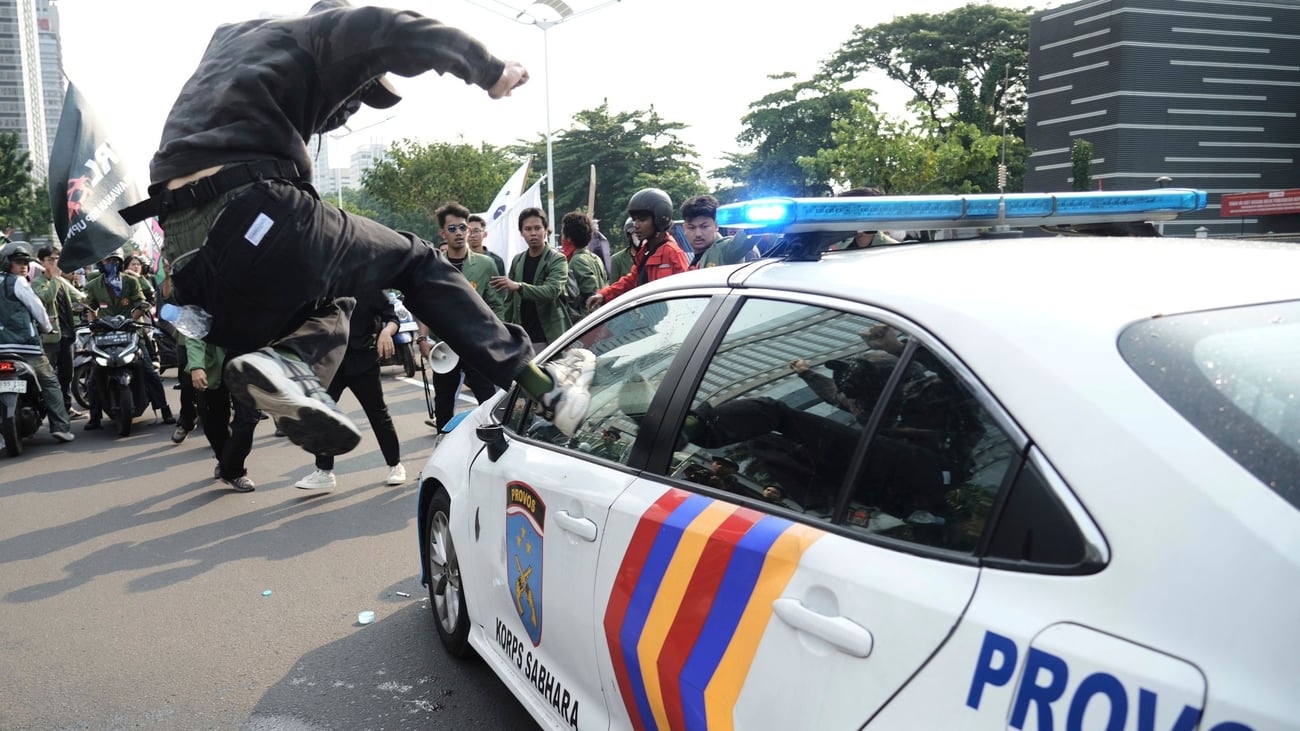
According to an Amnesty International report last December, at least 1,036 people in 19 cities faced violence at protests in just the short window from August 25 to September 1. Most of them involved “police use of unnecessary and excessive force.” That’s on top of the 11 deaths from around the same period. Rights officials in Indonesia recently concluded there were widespread abuses during the protests, including detainees who were beaten, electrically shocked or rubbed with hot chili paste.
Harsono, the Human Rights Watch researcher, said attacks by authorities were on the rise, especially since Subianto took office in October 2024.
“We’re seeing an increase under the [Subianto] administration,” he said, “affecting groups like journalists and human rights organizations.”
Harsono stressed that the backsliding did not start with Subianto. “This negative trend actually began during the second term of the Jokowi administration,” he said, as then-President Widodo weakened an anti-corruption agency and the Constitutional Court, one of the country’s top legal bodies.
Like many of his peers, Ranggadewa finds the Yunus case disturbing. He hopes that soon, a new president will replace Subianto and start steering Indonesia back in the direction of a fully functioning democracy.
Even so, mass protests have not returned. People “are starting to get scared of the police repression and maybe afraid of the government,” Ranggadewa said. He hasn’t heard plans for any at his university. He says the government is watching. “People from the military police are visiting the university to intervene with the student body and prevent future demonstrations.”
 Follow @LasseSrensen13
Subscribe to our free newsletters
Our weekly newsletter Closing Arguments offers the latest about ongoing trials, major litigation and rulings in courthouses around the U.S. and the world, while the monthly Under the Lights dishes the legal dirt from Hollywood, sports, Big Tech and the arts.