
 Search Articles


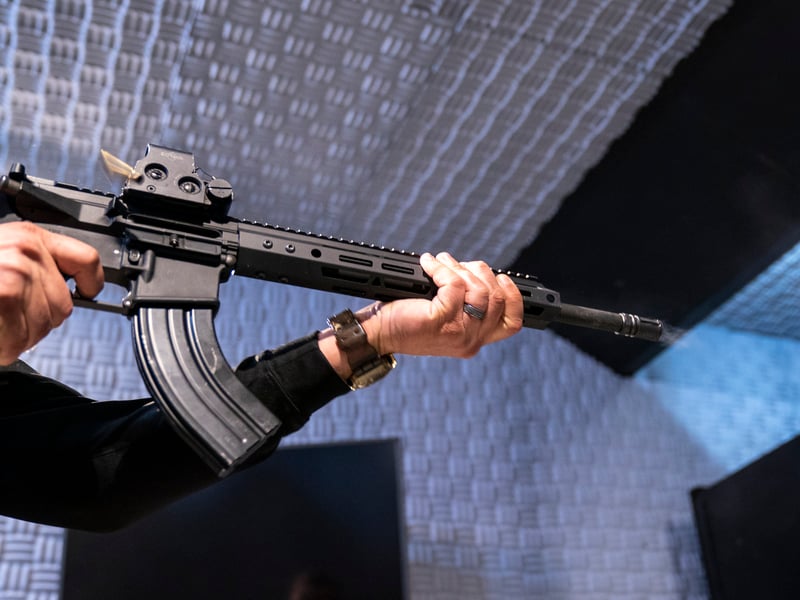
(CN) — A three-judge panel of the Ninth Circuit on Friday ruled that California was within its rights to establish gun-free zones in “sensitive places” like parks, beaches and businesses that serve alcohol.
But the panel did remove some places from that list, finding they were not adequately backed by historical tradition.
“Our nation has a clear historical tradition of banning firearms at sensitive places,” Senior U.S. Circuit Judge Susan Graber, a Bill Clinton appointee, wrote in an 84-page opinion for the court. “In its modern decisions concerning the Second Amendment, the Supreme Court has emphasized that its rulings do not call into question longstanding laws prohibiting the carry of firearms at sensitive places such as schools, parks and government buildings.”
Firearm advocates had challenged California’s Senate Bill 2, signed by California Governor Gavin Newsom in 2023. The bill designated 26 different “sensitive places” where concealed firearms are not allowed, including churches, schools, child care facilities, playgrounds, parks, stadiums and banks.
Gun rights groups and concealed-carry permit holders filed two lawsuits against California, challenging most of the no-gun zones set up by SB 2. In December, a federal judge preliminarily blocked the challenged provisions of the new law.
On appeal, the groups were joined by plaintiffs from Hawaii, who had challenged a similar law there prohibiting guns in certain places.
In that case as well, a federal judge had granted the plaintiffs a preliminary injunction. The defendants in the Hawaii and California cases appealed, and the Ninth Circuit consolidated and decided on both cases Friday.
In its decision, the Ninth Circuit panel noted there was a national tradition of banning firearms in certain places.
In that respect, they reasoned, lower federal judges in Hawaii and California had erred when they granted injunctions. That was true even when accounting for New York State Rifle & Pistol Association, Inc. v. Bruen , a 2022 Supreme Court decision that found a range of gun regulations across the country did not have historical backing and were unconstitutional.
Under that new historical-tradition standard, the panel concluded that some but not all of the places specified by Hawaii and California fell within a tradition of prohibiting firearms at sensitive places.
Businesses that sell alcohol, for example, have a long tradition of not allowing firearms, Graber said.
“Dating back to the colonial era," officials had understood that “firearms and intoxication are a dangerous mix,” Graber wrote. She cited laws that had banned that mix, including in Chicago in 1851 and in Missouri in 1883.
As for parks, Graber noted that restrictions on firearms go back to the 1800s.
“The constitutionality of those bans was unquestioned," she wrote. “Those regulations are akin to laws recognized by Bruen as sufficiently representative.”
At the same time, the panel did enjoin bans on carrying guns in certain types of places after finding they weren’t similarly backed by historical tradition. Among them: schools, hospitals, banks, public transit and places of worship.
C.D. Michel, a senior partner at Michel & Associates who represented the plaintiffs, slammed the ruling in a statement to Courthouse News.
“For over 100 years people who qualified for and were issued a license to carry a firearm in public were able to carry their firearm for self-defense in all of the places that the state attempted to ban permit holders from carrying in," he wrote. “There has never been an incident with a permit holder related to those places. This law was never about safety.”
The office of California Attorney General Rob Bonta, a Democrat, declined to comment on the ruling. A spokesperson said the office was reviewing the decision.
In addition to Graber, Friday’s panel consisted of Senior U.S. Circuit Judge Mary Schroeder, a Jimmy Carter appointee, and U.S. Circuit Judge Jennifer Sung, a Joe Biden appointee.
Subscribe to our free newsletters
Our weekly newsletter Closing Arguments offers the latest about ongoing trials, major litigation and rulings in courthouses around the U.S. and the world, while the monthly Under the Lights dishes the legal dirt from Hollywood, sports, Big Tech and the arts.