Search Articles


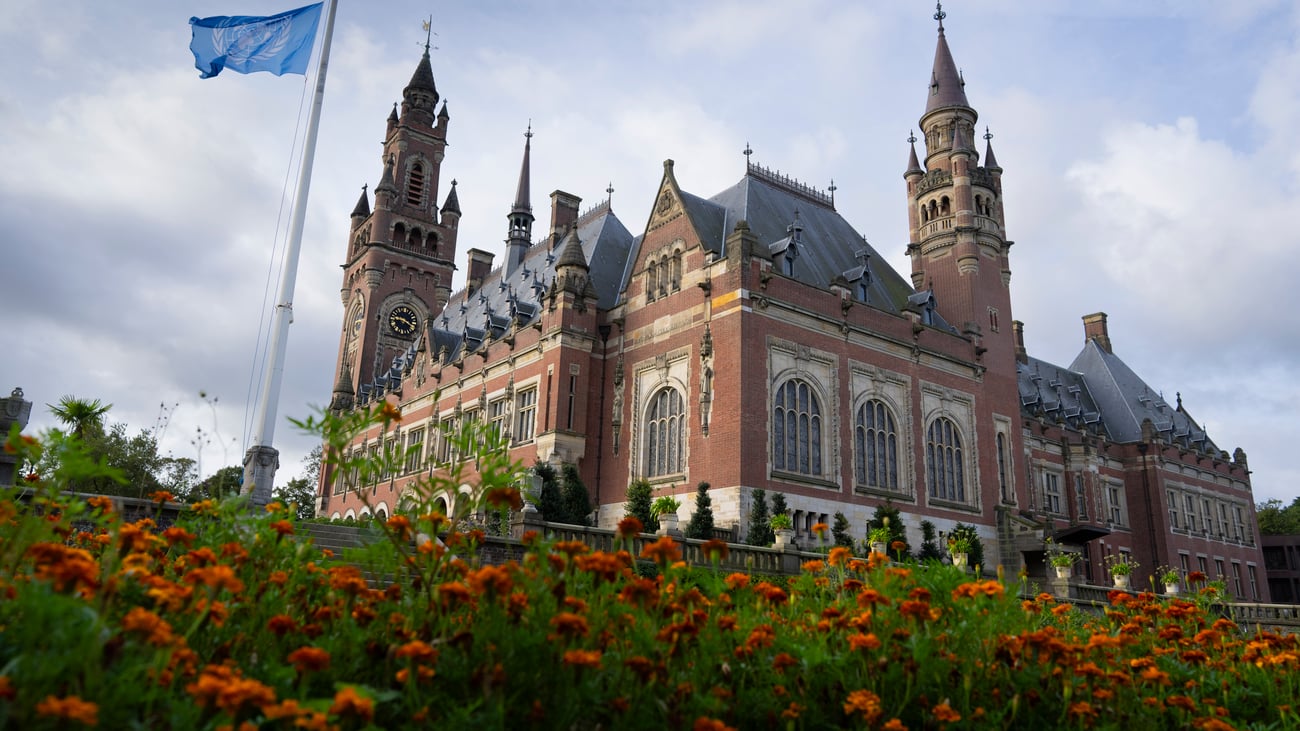
THE HAGUE, Netherlands (CN) — From dockworkers to delivery drivers, workers around the world just got a major boost from judges in The Hague, who said international law protects the right to strike.
The International Court of Justice said Thursday a landmark postwar labor treaty protecting workers’ freedom to organize also protects their ability to walk off the job, ending a standoff that has clogged parts of the United Nations’ labor system for more than a decade.
In 2012, employer groups at the International Labour Organization openly challenged something the agency’s labor experts had treated as settled for years: That unions cannot meaningfully defend workers if employees are allowed to organize but denied the power to collectively stop working.
The clash became so severe that one of the organization’s major standards meetings stalled out, with employers refusing to discuss cases involving strike rights.
A year later, employers pushed even further, questioning whether the labor agency’s own experts had authority to interpret international labor conventions at all.
Talks dragged on for years without a breakthrough. By 2023, the labor agency’s governing body voted to send the dispute to the world court after a request from the Workers’ Group backed by 36 governments.
“The court notes that strike action is one of the main activities engaged in and tools used by workers and their organizations to promote their interests and improve conditions of labor,” the judges wrote.
Instead of treating the missing word “strike” as decisive, judges focused on how unions actually function in practice. The treaty protects workers’ organizations and their right to organize their “activities” and “programs” — wording the court said naturally includes strikes even though the convention never explicitly mentions them.
The judges also rejected the argument that silence automatically wipes the right away. A treaty built around protecting workers’ ability to organize and defend their interests, they said, is difficult to read as stripping away one of labor’s most recognizable tools.
“Therefore, the protection of the right to strike is in line with the object and purpose of the convention,” they wrote.
Employer groups quickly emphasized what the judges did not decide.
The International Organisation of Employers, which serves as secretariat to the employers’ bloc at the labor agency, stressed that the court never defined “the precise content, scope or conditions for the exercise” of strike rights.
Roberto Suárez Santos, the organization’s secretary-general, said employers “remain committed to engaging constructively with governments and workers to identify an agreed tripartite way forward,” while urging labor partners to proceed pragmatically at June’s labor conference in Geneva.
Judges themselves also stressed that recognizing a right to strike did not settle how far that right extends or what restrictions governments may impose.
That means the labor agency’s long-running internal battle is only partly over. Governments, unions and employers now head back into fights over where countries can draw the line.
The International Labour Organization said Thursday that its governing body will revisit the issue in November, including possible next steps after the opinion. The ILO also noted that this was only the second time in its history that it had asked the world court to interpret one of its conventions.
Outside the courtroom, labor scholars described the opinion as one of the biggest victories for international union rights in decades.
Tonia Novitz, professor of labour law at University of Bristol, called the opinion “a victory” for treating strike action as inseparable from freedom of association and collective bargaining. She said judges anchored the ruling not only in the treaty text itself but also in decades of international human rights law and regional court decisions recognizing strike action as a core democratic protection.
Novitz also said the judges gave substantial weight to years of findings by the ILO’s supervisory bodies, whose interpretation of strike rights became a major source of tension inside the agency after 2012.
Even though future disputes over strike limits and national laws will continue, she said, “what cannot be denied is that there is a right to strike and that it is intrinsic to protection of freedom of association and the right to organise.”
Nicolas Bueno, assistant professor of public international law and European law at UniDistance Suisse, said the opinion finally closes “a long institutional crisis between employers and workers on the right to strike” inside the labor agency.
Bueno said judges applied standard treaty-interpretation rules under the Vienna Convention. He added that the opinion could now push governments, employers and unions back toward working together on international labor standards “for a fairer globalized economy.”
There is no appeal from an International Court of Justice advisory opinion. The opinion does not automatically rewrite national labor laws, and some countries — including the United States — never ratified the treaty at the center of the case.
Courthouse News reporter Eunseo Hong is based in the Netherlands.
Subscribe to our free newsletters
Our weekly newsletter Closing Arguments offers the latest about ongoing trials, major litigation and rulings in courthouses around the U.S. and the world, while the monthly Under the Lights dishes the legal dirt from Hollywood, sports, Big Tech and the arts.