
 Search Articles


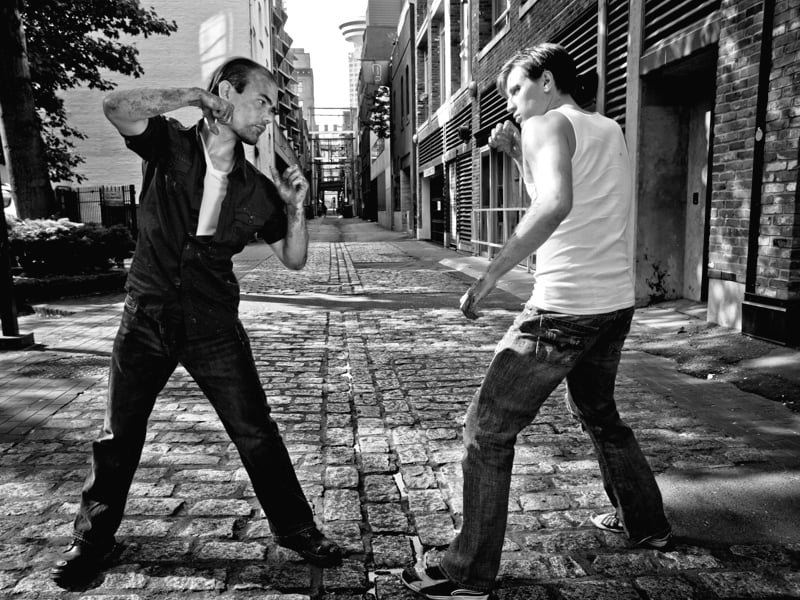
(CN) — In 2012, in a moment that would go down in fighting history, a superhero knocked out a barrel-chested drunk in Seattle and got away with it.
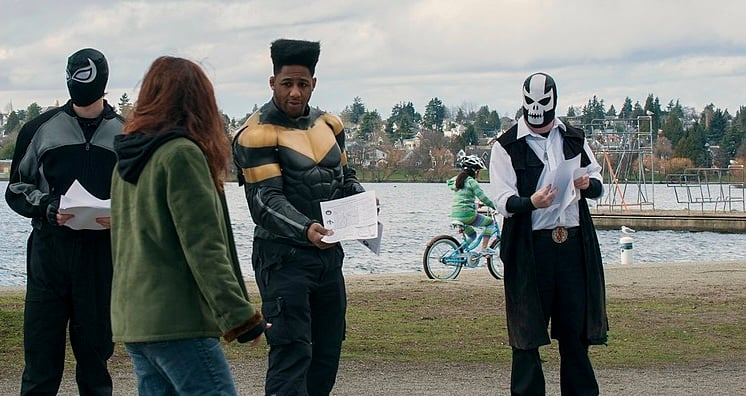
On one side of the melee was Phoenix Jones, real name Ben Fodor. A self-described crimefighter, he was leader of the Rain City Superhero Movement. The group was known for roaming the streets of Seattle and fighting crime, sometimes to the chagrin of law enforcement. Still, they’d had moderate success over the years, stopping carjackings, robberies and vandalism.
On Nov. 9, 2012, Jones was on patrol in his signature black-and-yellow outfit when he stumbled across two men. They were banging their fists on the window of a car, cracking its glass and scaring the passengers inside.
Jones confronted the men. His friend and sidekick Red Falcon called 911. As the cops headed to the scene, the barrel-chested man called Jones a racial slur and threatened to “bring this to your house."
Jones, who is Black, would later say that it was concern for his family’s safety — not pride — that motivated him to settle the matter mano a mano.
“Would you like to fight?” Jones politely asked his opponent. “Washington is a mutual-combat state.”
The barrel-chested man, who has never been publicly identified, seemed a little shocked but agreed.
What followed was one of the most historic street fights in recent history — a legal riddle that experts and masculinity influencers are still dissecting.
As an officer arrived on the scene, the men informed him of their plan. They set some ground rules: No weapons, and once one of them hit the ground, the fight would be over.
Jones didn’t tell his opponent that he was a former mixed martial arts fighter with 15 wins and two losses. Several roundhouse kicks and 37 seconds later, the barrel-chested man lay unconscious on the ground. A grainy bystander video of the event went viral, racking up more than 750,00 views in just a few days.
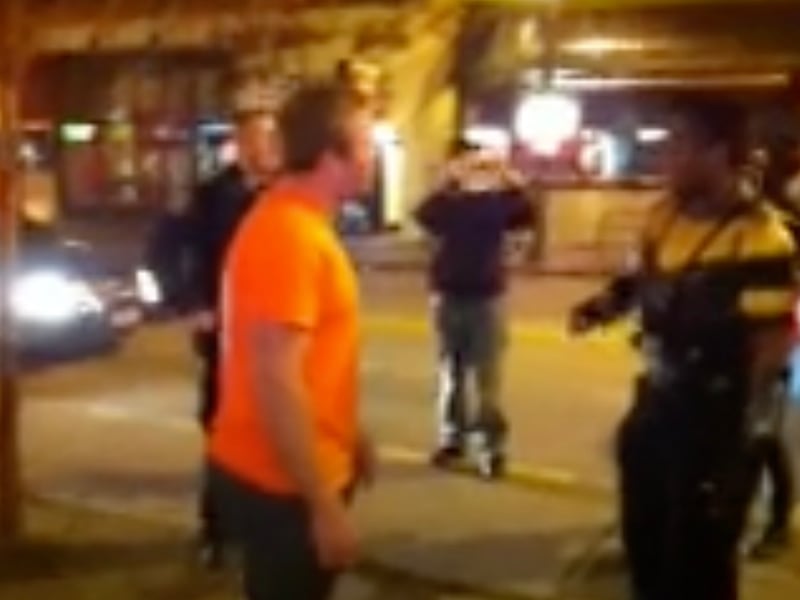
What catapulted the fight to viral glory wasn’t the fracas itself but what came next.
Or rather, what didn’t come next. Despite cops being mere feet away, no charges or arrests ever resulted from that fight.
In the semi-mythical world of mutual-combat laws, the lack of criminal charges has turned this 2012 Seattle brawl into something of a unicorn. Amid a sea of false claims of misunderstandings, it’s the only unambiguous, cop-approved example of a legal street fight in modern American history. And even as online communities of men daydream about quick fist-to-face justice, a fight like this may never happen again.
In theory, Jones’ K.O. was authorized under Seattle Municipal Code 12A.06.025. The 1973 ordinance, informally known as Seattle’s “mutual combat law,” allows fist fights when participants consent and there’s no danger to nearby people or property.
Seattle is one of only two places in the United States with such a carve-out for consensual street fighting. Naturally, the other is the Lone Star State, where Texas Penal Code 22.06 permits consent as an affirmative defense for assault charges, with some caveats. No one is allowed to use a weapon, and consent must be given without pressure or intimidation.
In an era of vigilante justice and fragile masculinity, Jones’ invocation of mutual-combat laws has remained in the public consciousness more than a decade later. These laws, after all, have all the makings of masculine fantasy, in which justice can be dished out quickly and with violence.
Mutual-combat laws have become a popular subject on social-media platforms like TikTok, Instagram and YouTube, where content creators have created a host of skits, commentary and infotainment trumpeting the legal virtues of mutual combat. Joe Rogan has watched Jones’ fight on his podcast. Never mind that Jones’ opponent never faced any criminal charges, and that his street justice therefore came without due process. Under a certain modern vision of brash masculinity, his disrespectful and dishonorable behavior may have mattered more than any court verdict.
Compared to their predecessors, young American men today are lonelier and less sexually active. They’re making less money and less likely to attend college. Against this depressing backdrop, influencers in the online manosphere offer an appealing vision: Build muscle, puff your chest out and threaten others, and you too can regain some of your masculine power.
Seen in that light, the resurgent popularity of mutual-combat laws is perhaps no surprise. Add a reference to the laws to any online threats and they quickly gain added gravitas. I’m not just willing to fight you , these online men are saying: I’m legally allowed to, if you’re man enough to agree.
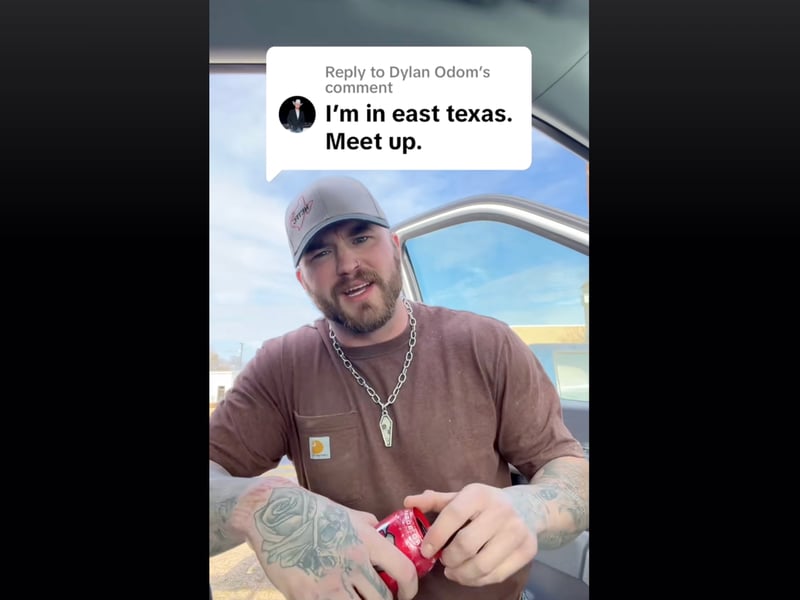
Look no further than content creators like McKrae Bentley, who now reference mutual-combat laws for the purposes of their online beefs.
“We’re both over 18, and mutual combat is a thing in Texas,” the influencer says in a recent TikTok video, taunting a viewer. “What are you gonna do with that information?”
If bringing up mutual-combat laws is just another form of macho peacocking, it makes sense that men sometimes talk about these laws in ways that are exaggerated and illogical. Last year, UFC fighter Sean Strickland cited the Seattle ordinance as a legal way for him to settle an ongoing feud with internet personality Bryce Hall.
“You all wanna see a dead body???” the fighter tweeted. Of course, as Strickland no doubt knows, mutual-combat laws do not allow for the murder of other people.
Hoping the cops will referee your street brawl? You may be out of luck. Although the Seattle Police Department did not ultimately respond to requests for comment for this story, police departments across Texas — including in big cities like Houston, Austin and Dallas — are emphatic that they won’t oversee consensual street fighting.
In Houston, police spokesperson Shay Awosiyan confirmed officers would “not engage” with anyone looking to have their fight supervised.
While he didn’t say so directly, his frustrated tone implied that would be a frivolous waste of resources.
“We got a lot of calls to run in the city of Houston,” Awosiyan told Courthouse News. “We don’t just have officers just chilling and waiting.”
Perhaps Texas police are just tired of the question. After all, it’s apparently not the first time they’ve gotten it.
“Officers will NOT make location to be the ‘referee,’” the Bay City Police Department felt compelled to state on its Facebook page. Instead, officers will “break up any fighting, and both parties will have a free ride to the county jailhouse.”
Cops’ distaste for public fighting adds an interesting wrinkle to mutual-combat laws. That’s because participants in street fights aren’t just liable for assault; they can also face other charges like disorderly conduct.
“Basically, even if a fight took place between two consenting individuals, they could still potentially be charged with another offense,” Jose Mendez, a corporal with Austin Police Department, explained in an email to Courthouse News. That helps explain why in Texas at least, legal examples of mutual combat are so hard to come by, despite social-media claims to the contrary. In Mendez’s more than five years supervising and patrolling Austin’s raucous Sixth Street (think: New Orleans’ Bourbon Street but with more cowboy hats), he wasn’t aware of a single case where cops refereed a fight instead of just ending it.
In Seattle, cops also seem a bit tired of talking about that time a superhero beat up a racist vandal.
Asked about the city’s mutual combat law, police spokesperson Patrick Michaud let out a dramatic sigh.
“Yes, I am familiar with that law,” he said with a laugh. He added that Seattle police were pretty busy but would try to respond to Courthouse News’ request by press time. Spoiler alert: They didn’t. Nonetheless, a legal analysis by Beckwith Law Group, a Seattle-based firm, supports the idea that just like in Texas, Washingtonians can face disorderly-conduct charges for brawling, even if the blows are mutual.
Beat up someone in the street, and common sense holds that you’ll likely face trouble with the law. Combatants can face charges besides assault, including for disorderly conduct.
All of which begs the question: Why didn’t Seattle police intervene in 2012 to stop a vigilante superhero?
Seattle PD has given mixed messages over the years. In the immediate aftermath of the fight, police defended their decision not to intervene.
Pointing to the city’s mutual-combat law, Sergeant Sean Whitcomb told Seattle Weekly it was a “unique” situation.
“This is not assault. These two guys squared up on each other,” Whitcomb said. “We’re not doing any further investigation on it.”
At other times, Whitcomb has contradicted himself. “No, it’s actually not legal to fight on any city street [or] in any public place,” he told a local NBC affiliate around the same time. Whitcomb declined to comment for this story but stressed he stood behind his previous statements.
Through it all, Whitcomb has maintained the officers did the right thing. Probably.
“I’m sure the officers could have physically stopped that fight from happening, but it would have resulted in a force response,” he said to Seattle Weekly. “Then, you and I would be talking about why SPD was using force to stop the fight.”
Jones could not be reached for comment for this story. He’s kept a lower profile since 2020, when, in a move uncharacteristic for a superhero, he was busted for selling MDMA. Still, he’s mused about the incident over the years, including in an interview with Full Contact Fighter, an MMA news site.
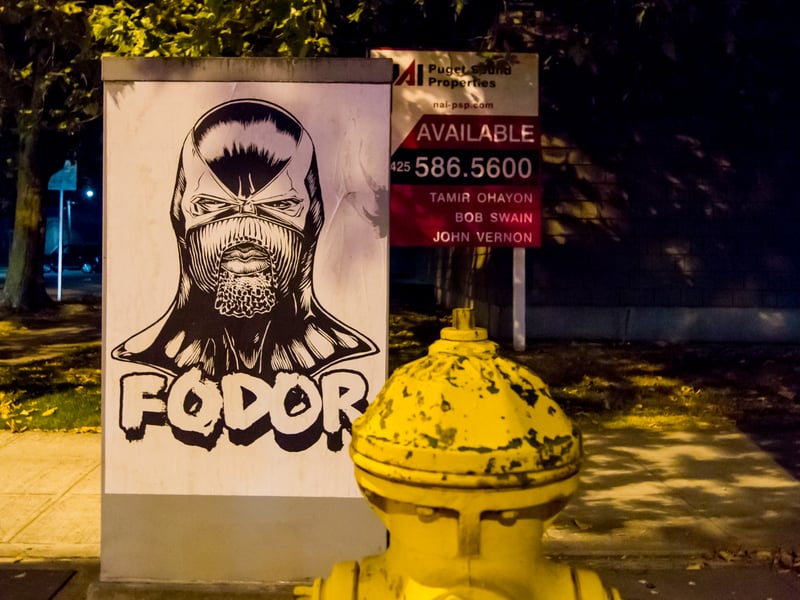
Jones has consistently said that he only proposed mutual combat because his opponent threatened to bring the fight to his house. “I take my family’s safety very seriously,” he wrote on his YouTube channel at the time. Even so, it’s unclear how much he understood about the legality of his actions. He wasn’t right when he told his opponent that Washington is a mutual combat state. Only Seattle law allows it. He’s also claimed, erroneously, that his legal right to mutual combat was enshrined under posse comitatus, an archaic common-law concept in which sheriffs and other authorities can mobilize citizens to fight crime.
“You can actually consent to a fight as long as you call the sheriff because of how old the law is,” Jones told Full Contact Fighter, referring to the concept as “posse combinante.”
Fast-forward to 2025, and Jones’ street brawl looks like a bit of a mixed bag. On one hand, the internet got some viral content in the form of a self-appointed superhero beating up a man. Legal scholars and street-fighting enthusiasts got a test case of Seattle’s mutual-combat law, the first and only.
On the other hand, Jones’ story has served as an origin point for much misinformation and mythos around mutual combat. To this day, influencers in the online manosphere hold it up as an example of vigilantism done right. In a time when a growing number of Americans seem to support vigilante justice, that grainy video from 2012 is a bit less quaint in retrospect. Even Joe Rogan agrees. Watching the footage on his podcast in 2019, he concluded: “It’s very irresponsible for the cops.”
Subscribe to our free newsletters
Our weekly newsletter Closing Arguments offers the latest about ongoing trials, major litigation and rulings in courthouses around the U.S. and the world, while the monthly Under the Lights dishes the legal dirt from Hollywood, sports, Big Tech and the arts.