Search Articles


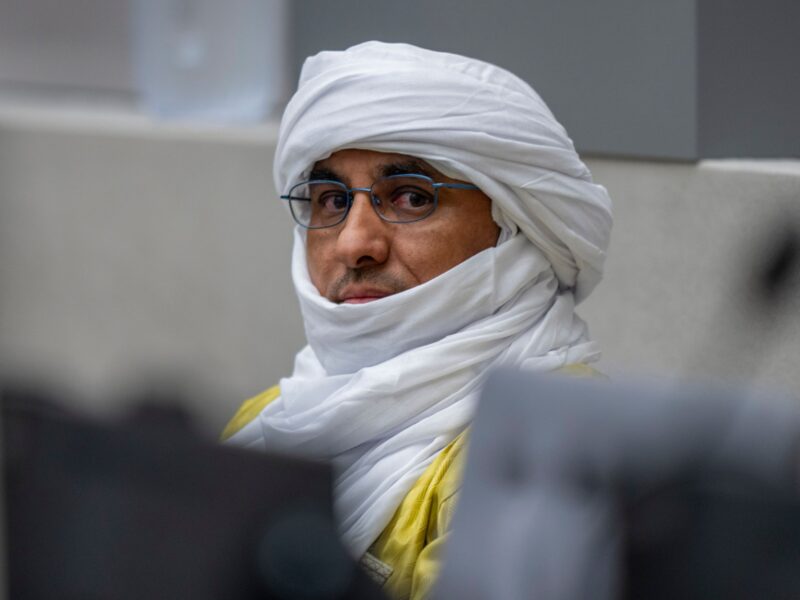
THE HAGUE, Netherlands (CN) — After tens of thousands of victims in northern Mali suffered years of violence under Islamist rule, judges at the International Criminal Court on Tuesday ordered 7.25 million euros (about $8.49 million) in reparations, putting a price tag on the damage and creating a roadmap for how justice might reach a city still living with the aftermath.
Al Hassan Ag Abdoul Aziz Ag Mohamed Ag Mahmoud was part of the Islamist police force that enforced a strict system in Timbuktu after armed groups linked to Ansar Dine and al-Qaida took control of the city in northern Mali in 2012. They imposed a hardline interpretation of religion that reshaped daily life almost overnight, with the Islamic police enforcing rules on the ground, carrying out arrests, overseeing punishments and bringing residents before makeshift courts that operated without basic safeguards.
Residents were beaten, publicly humiliated and punished through proceedings that offered little to no chance to defend themselves. Testimony in the case described how ordinary behavior could trigger detention and abuse, with women among those most affected, facing strict controls over their daily lives and harsh consequences for stepping outside imposed rules.
Al Hassan was convicted in June 2024 of crimes against humanity including torture and persecution, along with several war crimes, while being cleared of charges such as rape and sexual slavery. In November 2024, he was sentenced to 10 years in prison.
Now comes the harder part. With responsibility settled, the focus shifts to how to repair the damage in a way that matters to the people who lived through it.
Judges cast a wide net. A total of 65,202 people are treated as potential victims, alongside 49 identified direct victims tied to specific crimes. But they also drew a firm line. Reparations apply only to the crimes Al Hassan was convicted of, not the full range of abuses linked to the conflict.
With tens of thousands affected, the court made clear that “awarding individual reparations would be neither expeditious nor cost-effective." The judges shifted the case toward a broader approach aimed at repairing a whole city, not just settling individual claims, through measures like rehabilitation, symbolic recognition and community rebuilding.
Judges also stressed victims themselves should help design the programs so the measures reflect real needs.
“The mechanisms should privilege the voice of victims, including the victims of crimes other than persecution as well as for similarly situated victims of persecution, address their expressed needs and ensure that the measures implemented are actually meaningful to their lives,” the court noted.
Judges set Al Hassan’s liability at 7.25 million euros, tied to the scale of the harm rather than his ability to pay. The figure reflects the court’s assessment of the breadth and severity of the crimes, factoring in the number of victims, the types of harm suffered and the impact on the wider community, rather than calculating precise losses for each individual. In practice, he is unlikely to cover much of it, leaving the Trust Fund for Victims to raise money and carry out the plan.
The Trust Fund for Victims — created to carry out reparations ordered by the court and support victims and their families — must now design a plan laying out how reparations will be delivered on the ground. It is expected by early 2027, The order can still be appealed within 30 days, but unless that happens, the framework is set.
The International Criminal Court, created in 2002 under the Rome Statute, is a Hague-based tribunal backed by 125 member states that prosecutes individuals for the world’s most serious crimes, from genocide to war crimes and crimes against humanity, when national courts do not or cannot act.
The United States is not among its members, but its stance has not been static. Reacting to the ICC’s June 2024 conviction of Al Hassan, a U.S. legal adviser told the United Nations “the work of the International Criminal Court is vital” and described the ruling as “a significant step toward holding accountable those most responsible for atrocities committed against the civilian population in Timbuktu.”
That tone has shifted. As ICC investigations began touching U.S. personnel and close allies, from Afghanistan to the Israel-Gaza situation, Washington moved from cautious support to open pushback, slapping sanctions on court officials and anyone tied to its work. The ICC warned that kind of pressure cuts straight at judicial independence.
Advocacy groups have not held back. NGOs including the Coalition for the ICC say the sanctions go beyond politics, calling them a way to intimidate justice actors and “silence victims and advocates” trying to hold perpetrators accountable.
For victims in Timbuktu, though, all of that fades into the background. What matters to them now is simple: Whether the reparations plan becomes something real on the ground.
Courthouse News reporter Eunseo Hong is based in the Netherlands.
Subscribe to our free newsletters
Our weekly newsletter Closing Arguments offers the latest about ongoing trials, major litigation and rulings in courthouses around the U.S. and the world, while the monthly Under the Lights dishes the legal dirt from Hollywood, sports, Big Tech and the arts.