
 Search Articles


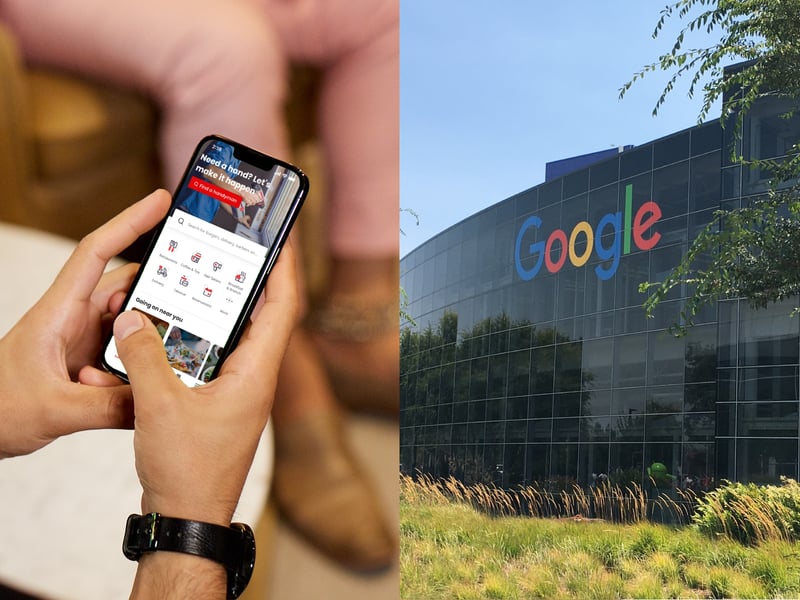
(CN) — A federal judge in California Wednesday said Yelp Inc. may proceed in its antitrust lawsuit against Google on its claim that the tech giant uses its monopoly power in general search services to compel people to use Google’s own local search product.
U.S. Magistrate Judge Susan van Keulen in San Jose, California, denied Google’s motion to dismiss the so-called tying claim. The judge had previously dismissed the claim, but Yelp reformulated it in an amended complaint.
The judge was persuaded by Yelp’s argument that the current design of Google’s search engine results page —with a large, graphics-driven “OneBox” that prominently highlights Google’s own local search results — causes a high percentage of so-called zero-click searches, where users just look at the local search results Google highlights without clicking on anything or scrolling down to Google’s other search results.
“There is nothing inherently incognizable about a tying theory wherein the tied product (here, alleged to be Google’s local search results) is delivered automatically upon use of the tying product (here, alleged to be Google’s general search),” van Keulen said in the ruling.
“Putting the pieces together, the court finds that Yelp’s refined theory that users are served local search results directly in Google’s OneBox and not only when they click on, e.g., Google Maps links, is cognizable,” she added.
The judge also accepted at this early stage of litigation, during which she looks only at whether a plaintiff has a plausible legal theory and not at the merits of their claims, that Yelp has sufficiently argued that users are “expressly coerced into consuming local search content via the OneBox” because Google’s terms of service don’t allow tampering to get around Google highlighting its own local search results,
Representatives of Google did not immediately respond to a request for comment.
Yelp sued Google last year, claiming the search behemoth operates an illegal monopoly, because it uses its search engine to promote Google’s own reviews, directing users away from results from other local search platforms like Yelp, even if the Yelp results are more accurate.
Yelp claims Google “has never been able to develop a high-quality local search service to rival that of Yelp and other local search platforms. Unwilling to invest or innovate to attract users in a competitive environment, Google has instead relied on a simple but effective strategy — it uses its monopoly power in general search to make sure that users never get to local search competitors in the first instance, diverting traffic away from those rivals and toward Google’s own inferior local search product."
In April, van Keulen denied in part Google’s bid to dismiss the lawsuit, but agreed that Yelp’s tying claim couldn’t proceed as stated.
In its amended complaint, Yelp beefed up the tying claim by focusing on zero-click searches.
“For these zero-click searches, Google is no longer serving as the ‘gateway’ to the internet,” Yelp argued. “Instead, Google furnishes its own content elevated over all vertical search competitors, without sending a click anywhere, not even to its own platforms or sponsored search result links.”
 Follow @edpettersson
Subscribe to our free newsletters
Our weekly newsletter Closing Arguments offers the latest about ongoing trials, major litigation and rulings in courthouses around the U.S. and the world, while the monthly Under the Lights dishes the legal dirt from Hollywood, sports, Big Tech and the arts.