
 Search Articles


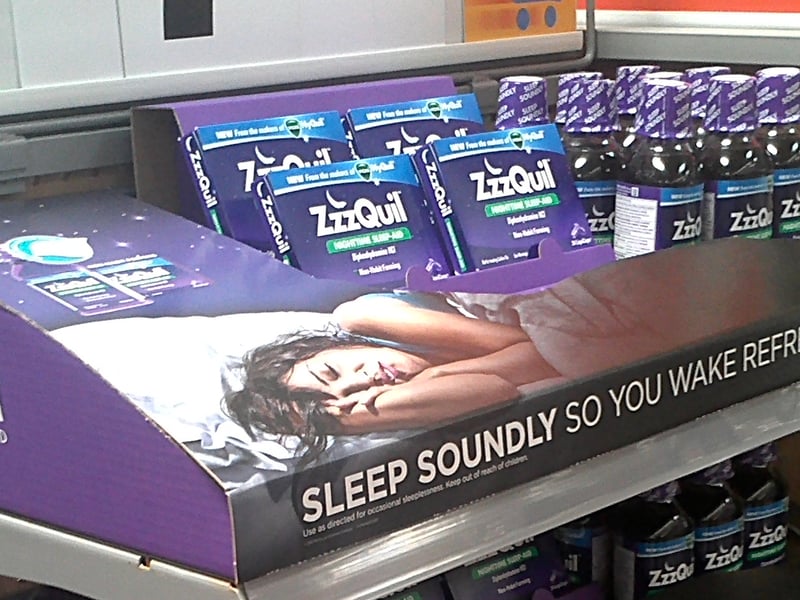
SAN DIEGO (CN) — A federal judge in San Diego allowed parts of a consumer class action to proceed against Procter & Gamble over claims that its sleeping gummies allowed customers to fall asleep naturally.
U.S. District Judge Todd Robinson primarily sided with a class of consumers who dispute the labeling on “ZzzQuil Pure Zzzs” gummies. The named plaintiff, Valerie Perkins, sued in 2025, claiming the labels were false, misleading and likely to deceive reasonable consumers, who wouldn’t expect a product with a natural label to contain synthetic ingredients.
The product label says the gummy “helps you fall asleep naturally.” Much of the plaintiffs’ disagreement revolves around how a reasonable consumer might interpret the term “naturally.”
Robinson, a Donald Trump appointee, wrote that it was plausible that a consumer could interpret the term to mean that the product does not include synthetic products.
“Accordingly, the court finds the products’ front labels are — for purposes of the pleading stage — ambiguous because reasonable consumers would necessarily require more information before they could reasonably conclude whether the Products contain ‘natural’ (instead of synthetic) melatonin,” Robinson wrote.
The gummies contain synthetic melatonin. Melatonin is a type a hormone that humans produce on their own. The majority of melatonin supplements are synthetic, or created in a lab, according to the University of California Davis Health.
Procter & Gamble argued that a reasonable consumer would understand that the hormones are not extracted from animals or humans for its products and must therefore be produced artificially. But Robinson didn’t agree with this.
A natural, plant-based phytomelatonin is also available in consumer goods, as noted by the plaintiffs. Procter & Gamble argued that the plant-based hormones are not extracted naturally either, but Robinson disagreed.
“The primary distinction between these processes is that the former involves extracting already-made melatonin from a natural source (e.g., a plant or plant derivative), whereas the latter involves combining materials to create melatonin,” he wrote. “In other words, in extraction, melatonin is both a starting material and the end product. But in chemical synthesis, melatonin is only the end product.”
Procter & Gamble also argued that there is a significant price gap between synthetic melatonin and phytomelatonin, which consumers use to distinguish between the two products.
Robinson was unpersuaded.
“If defendant does not understand the distinction between the extraction of melatonin from plants and the chemical synthesis of melatonin, the court is not persuaded that a reasonable consumer would understand that distinction, either,” he wrote.
However, Robinson granted Procter & Gamble’s motion to dismiss a claim for injunctive relief that would require disclosures about the products.
“Specifically, defendant contends that because plaintiff is now aware that the products’ melatonin is synthetically manufactured and that the slogan ‘helps you fall asleep naturally’ refers to the body’s process, as opposed to the origin, of the melatonin, plaintiff cannot be ‘wronged in the similar way’ in the future,” Robinson wrote. “Because plaintiff is now aware that the melatonin in defendant’s products is not ‘natural’ as she understands it to be, it would be unreasonable for plaintiff to rely on the products’ use of ‘naturally’ again in the future.”
The remaining consumer deception claim will proceed in court.
The parties did not respond to requests for comment sent Friday.
Subscribe to our free newsletters
Our weekly newsletter Closing Arguments offers the latest about ongoing trials, major litigation and rulings in courthouses around the U.S. and the world, while the monthly Under the Lights dishes the legal dirt from Hollywood, sports, Big Tech and the arts.